Male Facial Proportions: Facial Thirds, Fifths and the Golden Ratio Explained
What facial thirds, facial fifths, FWHR and the golden ratio actually measure, the male reference ranges, and how much they really matter for attractiveness.
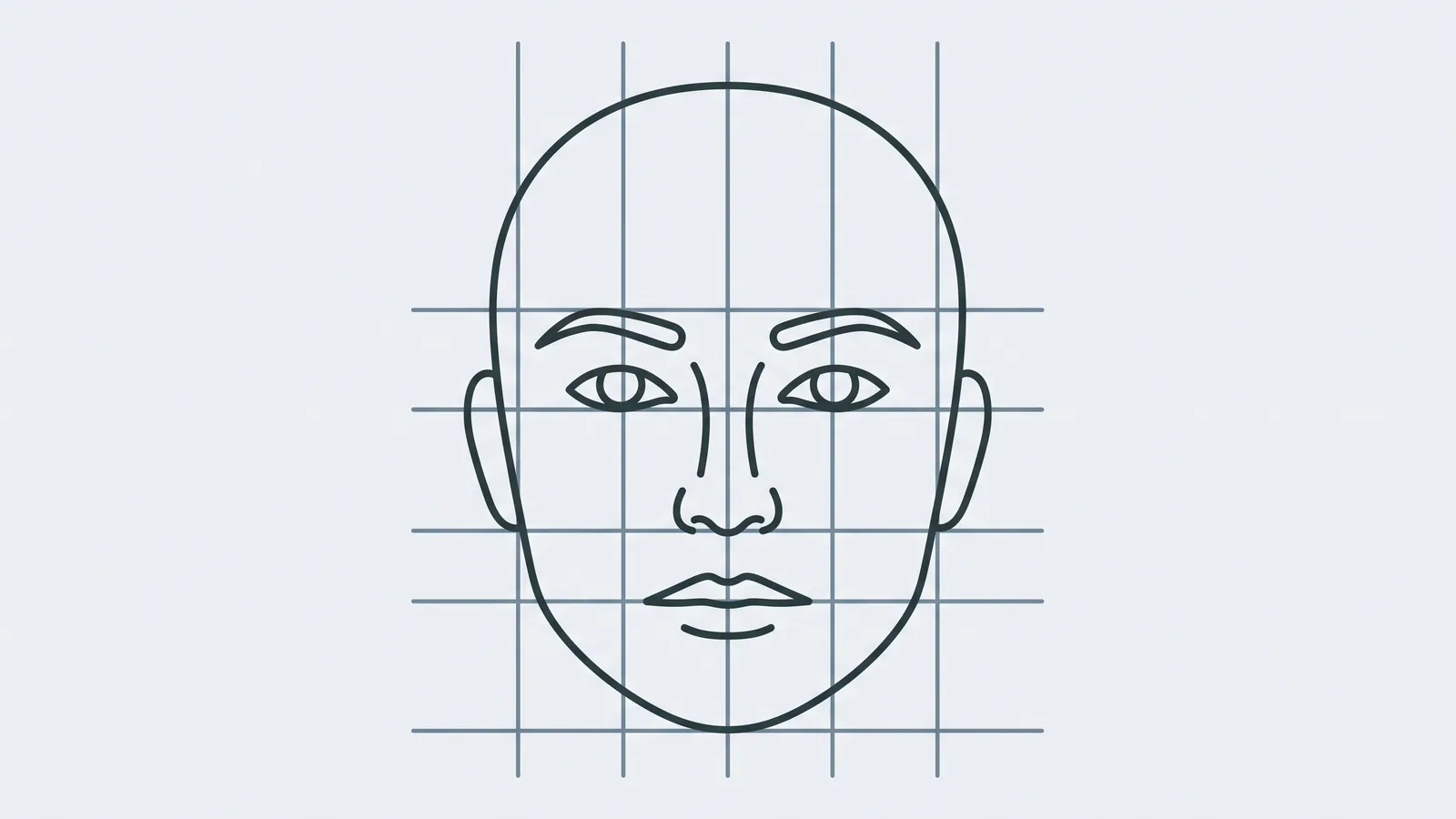
Facial "harmony" is not mystical. It is a set of proportions that tend to read as balanced across faces. Here is what the common measurements mean for men, and what the reference ranges are.
Facial thirds
Divide the face into three vertical sections:
- Upper third: hairline to brow
- Middle third: brow to base of the nose
- Lower third: base of the nose to bottom of the chin
In a balanced face these three are roughly equal, near 33% each. A tall upper third (a large forehead) is common and is one of the few things a haircut can genuinely disguise, which is why a forward fringe suits some face shapes.
Facial fifths
Divide the face into five vertical columns, each ideally about one eye-width wide. This checks eye spacing and facial width. The classic guideline is that the space between the eyes equals one eye width, and the mouth spans roughly the width of the two inner columns.
FWHR (facial width-to-height ratio)
FWHR is the bizygomatic width (cheekbone to cheekbone) divided by the height from brow to upper lip. It has real research behind it in perception studies. Higher FWHR reads as more dominant; it is not "better" or "worse," just a lever that interacts with the rest of the face.
The golden ratio caveat
You will see the golden ratio (1.618) marketed heavily. Some facial relationships sit near it, but treating a single number as a beauty score is pseudoscience. Proportions are conventions and tendencies, not laws. Any honest report tells you which measurements are grounded in perception research and which are aesthetic convention.
How much do proportions matter?
Less than the internet claims, and differently than you expect. Two things are usually true at once:
- The proportion you are worried about is often already in range.
- The thing dragging your look down is usually soft tissue: brows, beard line, skin, body fat, hair.
That is why we lead with measurement. ASCNDED measures 30+ metrics from one photo, shows your value against the male range with a confidence interval, and, crucially, points you at the soft-tissue fixes that actually move.
The bottom line
Learn the proportions so you understand your face, but do not cope or panic over a single ratio. Measure everything, then spend your effort where the numbers say the leverage is.
See your own numbers.
Upload one photo and get your facial proportions, face shape, and a non-surgical plan in about 60 seconds.
Scan my face