Philtrum Length: What It Is and What It Affects
What the philtrum is, typical lengths, how it affects upper lip appearance and perceived age, why it lengthens over time, and what actually changes it.
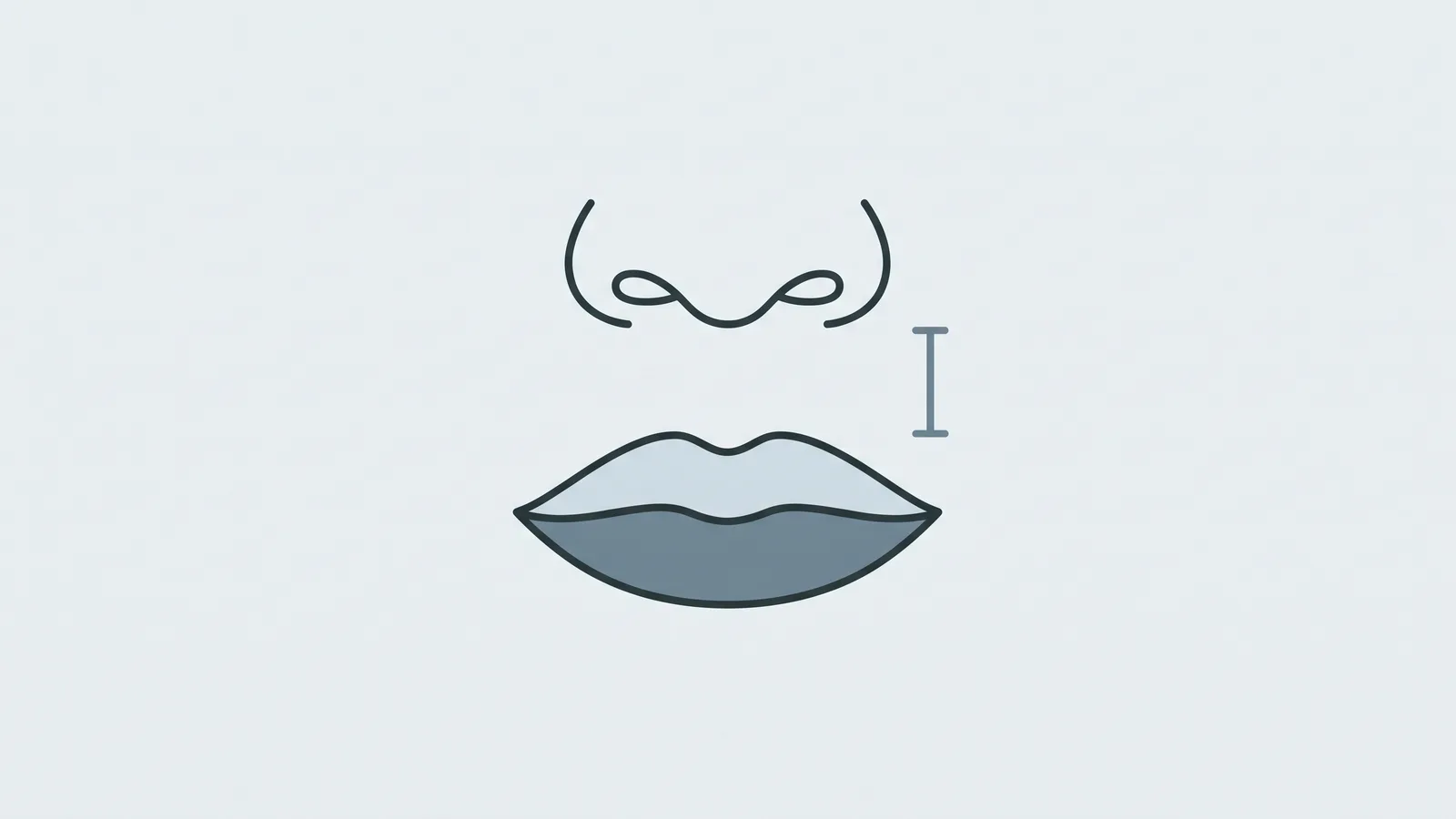
The philtrum is the vertical groove running from the base of your nose to the middle of your upper lip. Its length is measured from the subnasale, where the nose meets the lip, down to the top edge of the upper lip at the midline.
It is a small measurement that affects the lower face more than its size suggests, and it is one of the few facial dimensions that changes measurably over a lifetime.
What counts as typical
Most adults measure somewhere in the range of 11 to 15 millimetres, with men averaging slightly longer than women. Reported figures vary between studies depending on population and on exactly where the measurement endpoints are placed.
As with every measurement in facial aesthetics, the target figures circulating online are mostly derived from small aesthetic preference studies rather than from population data. Treat your number as a position on a range.
More useful than the absolute figure is the proportional relationship. The philtrum sits within the lower third of the face, and what matters visually is its length relative to the height of the chin and the visible upper lip beneath it, not its length in isolation. More on why proportions interact
What it affects
Visible upper lip. A longer philtrum means the distance from nose to lip is greater, which reduces the proportion of the lower face given over to visible lip. The lip itself has not changed. Its context has.
Perceived age. This is the significant one. The philtrum lengthens gradually across adulthood as the upper lip loses volume and the tissue between nose and lip elongates and descends. The result is less visible vermilion, meaning the coloured part of the lip, and a longer flat area above it. This is one of the more consistent age-related changes in the lower face, and it is why a short philtrum with a full upper lip reads as youthful.
Tooth show. How much of your upper teeth is visible at rest and when speaking. A longer philtrum reduces resting tooth show, and this is why lip lift procedures are assessed partly on tooth display rather than on lip size alone.
Overall lower third balance. Within the lower third, the conventional division puts roughly the upper portion from nose base to lip line and the remainder from lip line to chin. Philtrum length is what determines the first part, so it shifts the whole lower third proportion. Measure your facial thirds
Why it varies
Genetics, primarily. Philtrum length is a heritable structural feature like any other.
Age, reliably. It lengthens across adulthood in nearly everyone through soft tissue descent and loss of upper lip volume.
Dental and skeletal structure. Vertical maxillary position affects the whole lower third, including how the philtrum sits. This is why philtrum appearance can change following orthodontic or orthognathic treatment.
Notable medical context. A distinctively long, smooth philtrum with a thin upper lip is one of the recognised facial features associated with fetal alcohol spectrum disorders, alongside small eye openings. This is a clinical assessment made by a doctor as part of a full picture, not something anyone should be self-diagnosing from a measurement. Philtrum length varies enormously in the general population and a long philtrum on its own means nothing of the kind.
What changes it
Nothing you do at home. It is soft tissue over skeletal structure, and neither responds to exercises, massage, or products.
Lip lift surgery is the direct intervention. A subnasal or bullhorn lip lift removes a strip of skin beneath the nose and shortens the philtrum, which increases visible upper lip and resting tooth show. It is a real procedure with a scar placed at the base of the nose, and results are permanent and difficult to revise. The assessment for it is based on philtrum length and tooth show rather than on lip volume, which is why some people are told filler is the wrong answer for what they want.
Lip filler does not shorten the philtrum. It adds volume to the lip itself, which changes the balance of the area and can partially offset the appearance of a long philtrum. Overfilled lips on a long philtrum tend to look worse rather than better, because the underlying proportion is untouched.
Orthognathic surgery affects the whole lower third including philtrum appearance, and is done for functional reasons.
Frequently asked questions
What is a normal philtrum length? Most adults fall roughly between 11 and 15 millimetres, with men averaging slightly longer. Reported ranges vary by population and by where the measurement endpoints are placed.
Is a long philtrum bad? It is a normal anatomical variation. Its practical effects are less visible upper lip and reduced tooth show at rest, and it tends to read as slightly older because the philtrum lengthens naturally with age.
Can you shorten your philtrum naturally? No. It is determined by soft tissue over skeletal structure, and neither responds to exercises, massage, or topical products. A lip lift is the only intervention that shortens it.
Does the philtrum get longer with age? Yes, in nearly everyone. Soft tissue descent and loss of upper lip volume lengthen it across adulthood, reducing visible lip and tooth show.
Does lip filler shorten the philtrum? No. It adds volume to the lip, which changes the balance of the area without altering the distance from nose to lip. For a genuinely long philtrum, a lip lift addresses the actual proportion and filler does not.
Why does my upper lip look thin? Often it is philtrum length rather than the lip itself. A long philtrum reduces the proportion of the lower face given to visible lip, so the lip reads thin without being small. This distinction matters because it determines whether filler or a lip lift is the appropriate answer.
Related reading Facial thirds explained · Facial harmony · Facial aesthetics: the measurements that matter
See your own numbers.
Upload one photo and get your facial proportions, face shape, and a non-surgical plan in about 60 seconds.
Scan my face