Male Facial Attractiveness: What the Research Actually Says
A fair account of the research on male facial attractiveness: what has replicated, what has not, the effect sizes involved, and where popular claims outran the evidence.
A great deal is asserted confidently about this, and the confidence generally exceeds the evidence.
This is an account of what the research supports, what it does not, and where the effect sizes actually sit. Some of it is more solid than people assume. Rather more of it is considerably shakier.
What has replicated well
Averageness
The most robust finding in the field.
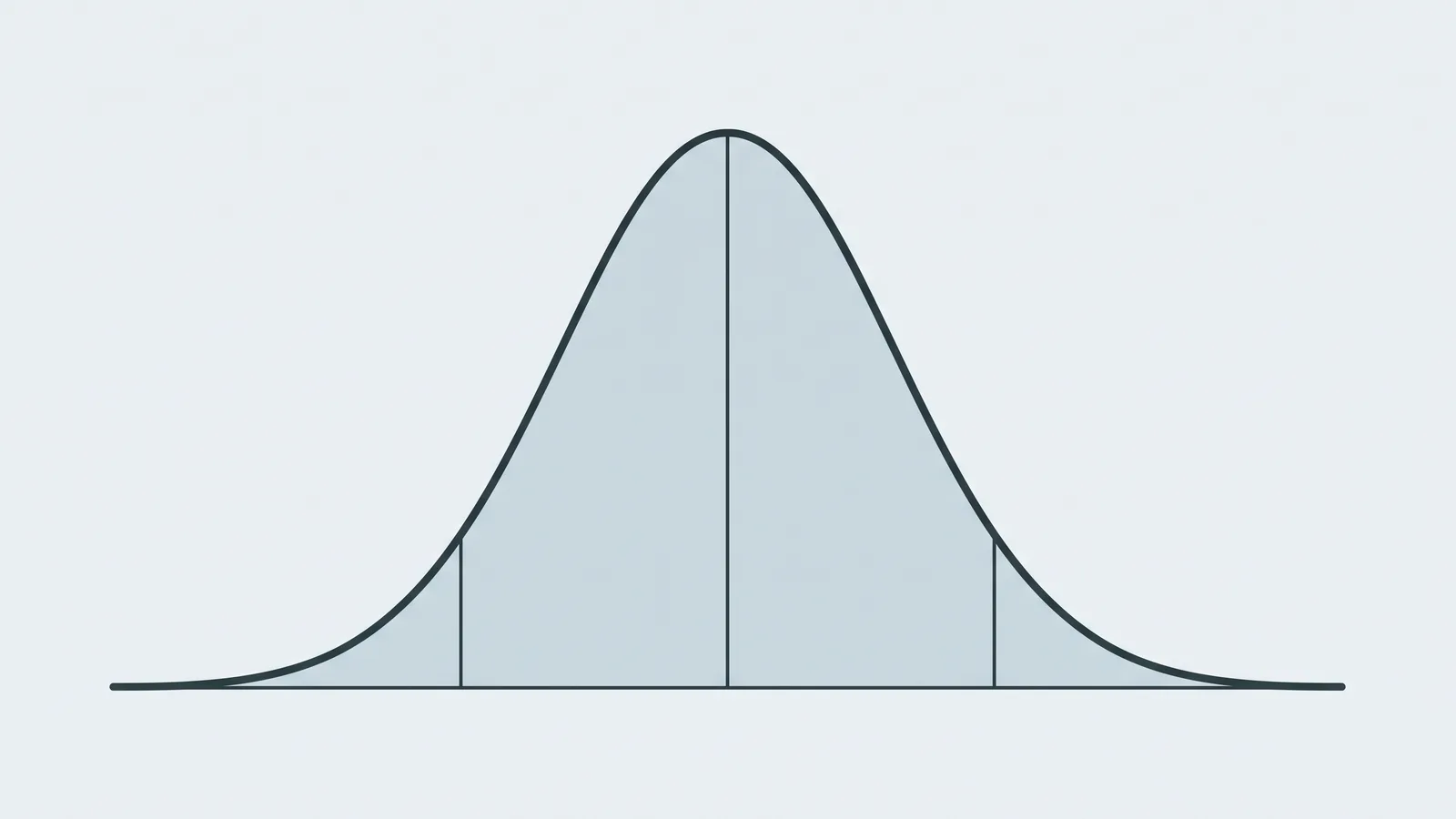
Faces produced by digitally averaging many individual faces together are rated as more attractive than most of the faces that went into them. This was first demonstrated in 1990 and has replicated consistently since across different populations and methods.
Averageness does not mean plain. It means proportions near the population mean, which produces a face where no single feature reads as unusual. The practical implication is counterintuitive to how this subject is usually discussed: what registers as an attractive face is often one without a standout feature rather than one with several.
Cross-cultural agreement
People agree on who is attractive substantially more than chance predicts, and that agreement holds reasonably well within and across cultures and age groups, including in young children who have had limited cultural exposure.
A large meta-analytic review pooling multiple meta-analyses established this fairly firmly. Attractiveness is not purely arbitrary or purely learned.
The halo effect
Attractive people are assumed to possess other positive traits, including competence, intelligence, and social skill, in the absence of any evidence. This is a well-documented cognitive bias with real consequences in hiring, legal, and social contexts.
Worth being clear about what this establishes. It is a finding about how observers behave, not about attractive people possessing those traits.
Rapid judgement
First impressions of faces form extremely quickly, in roughly a tenth of a second, and additional viewing time increases confidence more than it changes the judgement.
This has an implication people miss. If judgement is that fast and that automatic, it is happening on a face in motion, at conversational distance, in ordinary light, with expression. Not on a frozen frontal photograph, which is what every measurement discussion is actually about.
What is weaker than claimed
Symmetry
Symmetry correlates with rated attractiveness, but the effect is smaller than commonly asserted and part of it appears to be carried by averageness rather than by symmetry itself. Artificially perfected symmetry is often rated as slightly unsettling rather than more attractive.
Everyone is asymmetric. Most asymmetry sits well below what anyone notices in ordinary interaction.
Masculinity
This is the big one for male facial attractiveness, and the popular version has not held up.
The claim that more masculine male faces, meaning heavier brow ridge, wider jaw, more pronounced dimorphic features, are reliably rated as more attractive produces inconsistent results. Findings vary substantially between studies, populations, and stimulus types. Preferences for masculinity in male faces are considerably less consistent than preferences for femininity in female faces.
A number of widely publicised effects in this area, particularly those linking preference shifts to menstrual cycle phase, have had significant replication problems in larger and better-powered studies.
Facial width-to-height ratio
An unusually large popular literature grew around this measurement, linking it to aggression, dominance, risk-taking, unethical behaviour, and financial decision-making, starting from a 2008 study on penalty minutes in professional ice hockey.
Larger studies and meta-analyses have found the picture considerably weaker. Several specific findings failed to replicate, surviving effects are small, and parts of the early literature show signs of publication bias.
There is also a substantial confound. FWHR correlates with body mass, because facial width includes soft tissue, and a number of studies did not control for this adequately. Some of what was attributed to skeletal structure may reflect body composition.
The proposed link to testosterone, which was the mechanism underpinning most of the behavioural claims, has produced inconsistent results in direct tests.
What does hold up is that higher FWHR affects how people are perceived, with such faces rated as more dominant-looking. That is a finding about observers, not about behaviour. More detail
The golden ratio
Widely repeated and poorly supported. Faces contain enough landmarks that some ratio will approximate 1.618 in nearly any face if the landmarks are selected after the fact. Applied consistently, the correlation with rated attractiveness is weak. The proportional masks marketed on this basis derive from narrow samples and effectively score deviation from one group's average.
The finding that reframes everything else
When researchers separate how much of the variation in attractiveness ratings comes from shared consensus and how much from individual raters, roughly half is private taste.
That component is specific to the person doing the looking. It does not average out, it is not predictable from facial geometry, and no measurement captures it.
This does not mean attractiveness is arbitrary. The shared half is real, substantial, and measurable, which is what the cross-cultural agreement work establishes.
It means that any assessment of a face, however accurate, addresses about half the question. The other half is about who is looking.
What this means practically
Effect sizes are moderate, not deterministic. Attractiveness affects how people are treated, sometimes substantially, and it explains far less of the variance in whether people have friends, relationships, or good lives than the internet suggests. The strong claim, that appearance determines outcomes, is the founding premise of specific online communities and it is not supported.
Averageness, not exceptionalism. The most robust finding points toward proportionality rather than any individual feature being outstanding. This is close to the opposite of how facial aesthetics is usually discussed, where the framing is a search for standout features and deficits.
The measurements people obsess over are the ones with the weakest evidence. Masculinity, FWHR, and golden ratio conformity are the three most discussed and the three that have held up least well. Averageness and symmetry are more solid and considerably less exciting.
Static assessment underestimates people. Judgement happens fast, on moving faces, with expression and manner included. Everything measurable from a photograph excludes all of it.
Frequently asked questions
What makes a male face attractive? The most robust finding is averageness, meaning proportions close to the population mean. Symmetry contributes modestly. Masculinity findings are inconsistent. And roughly half of attractiveness judgement comes from individual taste that no facial property predicts.
Is facial attractiveness objective? Partly. There is genuine agreement between raters, within and across cultures, which is more than chance would produce. There is also a large individual component, roughly half of the variance. Both are true simultaneously.
Does a strong jaw make a man more attractive? Less reliably than commonly assumed. Preferences for masculine features in male faces vary considerably across studies and populations, and are notably less consistent than preferences for feminine features in female faces.
Does FWHR predict personality or aggression? Not usefully. Early studies reported associations, but larger studies and meta-analyses found the effects small and inconsistent, several findings failed to replicate, and body mass is a substantial uncontrolled confound in parts of the literature.
Can you measure how attractive someone is? You can measure facial proportions accurately. You cannot measure attractiveness, because roughly half of it depends on the individual observer, and the shared half is not resolvable to a decimal point from a static frontal photograph.
Does the golden ratio predict attractiveness? Not reliably. Applied consistently the correlation is weak, and the proportional templates used to score faces derive from narrow samples.
Related reading Facial aesthetics: the measurements that matter · How attractive am I? · FWHR explained · Facial harmony
See your own numbers.
Upload one photo and get your facial proportions, face shape, and a non-surgical plan in about 60 seconds.
Scan my face